
Exploring Middle Franconia · A company feature · Part 2: The Products
A curtain rod rarely attracts much attention in everyday life. But when windows follow an unusual shape, a curtain needs to divide a room, or a shower curtain rod must curve around an unconventional bathtub, the engineering behind this seemingly simple product becomes apparent. At Stahldeko in Emskirchen, the product range extends far beyond straight curtain rods.
01 / An Overview
One Idea, Many Different Products
Browse the customer photos from this Emskirchen company and you will see very different spaces: a bright sunroom, an irregularly shaped shower, a narrow coat-storage niche, a patio, and a fitting room in a clothing boutique. What connects them is a practical challenge. Something needs to be suspended, guided, screened off, or stored efficiently—and an off-the-shelf solution is not quite right.
Stahldeko offers several product families for these situations: curtain rods and tracks, shower curtain rods, clothes rails and coat rods, kitchen rails and towel bars, and metal structures for outdoor and commercial spaces. Alongside straight designs, the company produces curved shapes and custom-made solutions. The differences are not merely visual; they are largely determined by how the products will be used.
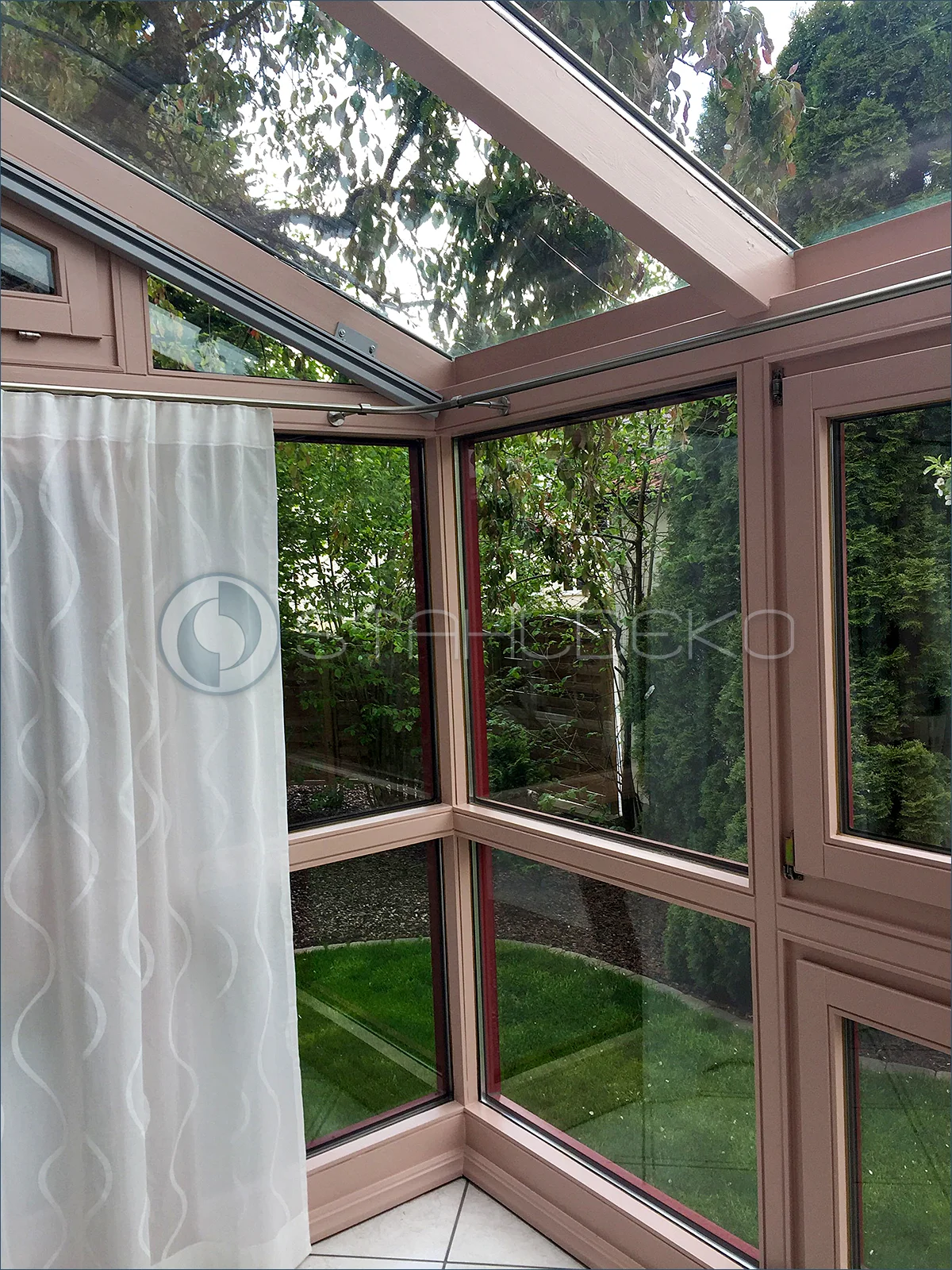
A sunroom window wall is a good example. Here, the curtain needs to travel across several sections rather than stopping at a short stretch of wall. The rod becomes part of the room's design while still needing to operate smoothly every day.
02 / Windows and Bay Windows
Curtain Rods: Straight Is Only One Option
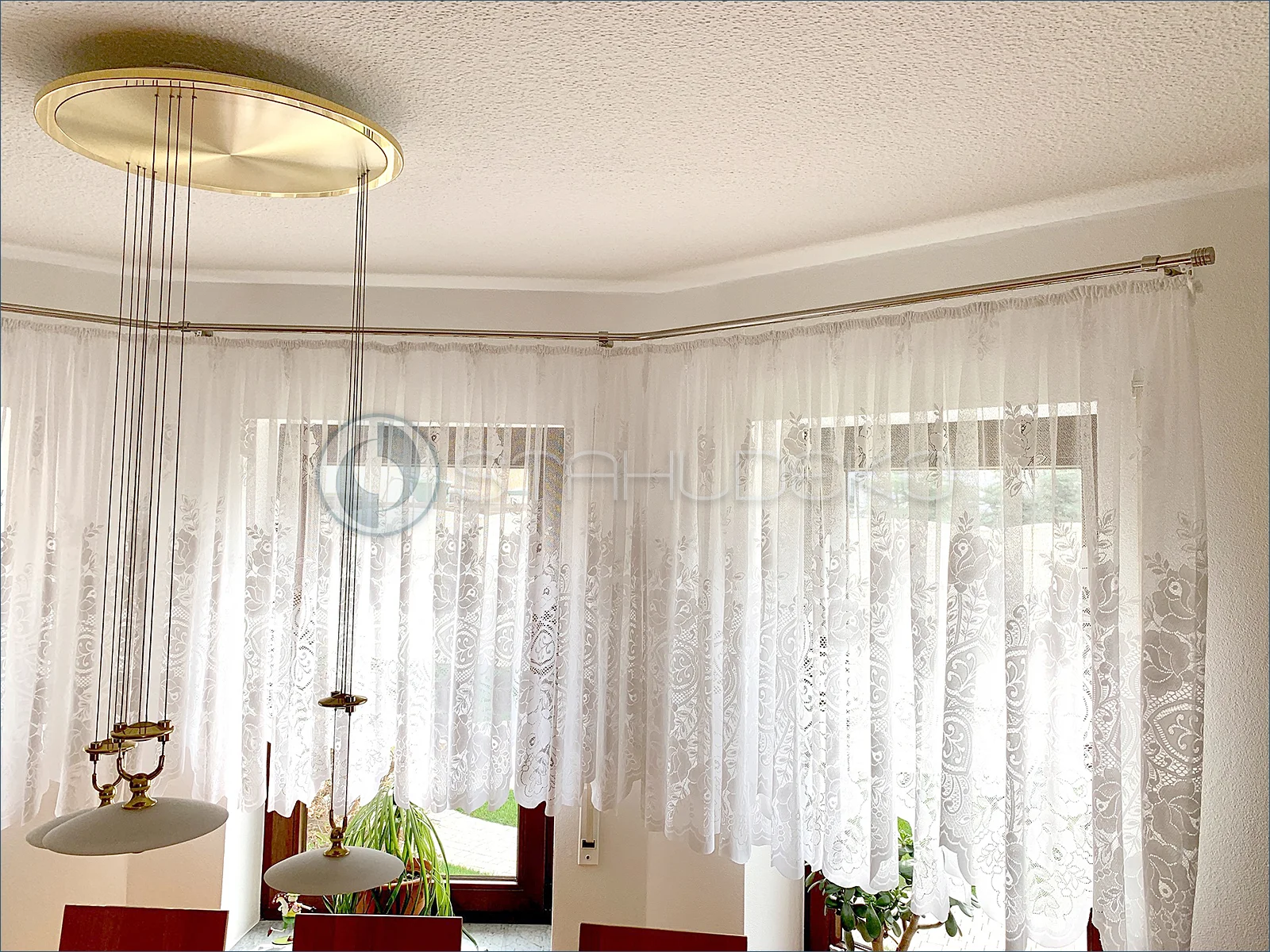
A conventional curtain rod runs straight across a window. Bay windows, recesses, sloped ceilings, and wraparound glazing make things more complicated. A rod may need an L-shaped or U-shaped bend, a circular arc, or several angled sections following the bay window. Depending on the application, round-tube rods or internal-track profiles can be used.
With a round-tube rod, curtains may hang from rings or grommets. On an internal-track curtain rod, the carriers travel inside the profile. Both systems have their advantages. The right choice depends on the curtain type, desired appearance, mounting method, and shape. Stahldeko offers internal-track versions in stainless steel look, white, and black, among other options.
A three-sided bay window illustrates why a made-to-measure shape is more than a decorative detail. The rod follows the window surfaces instead of cutting across the room in a straight line, allowing the curtain to move along the intended path.
03 / In the Bathroom
Shower Curtain Rods: When the Bathroom Sets the Rules
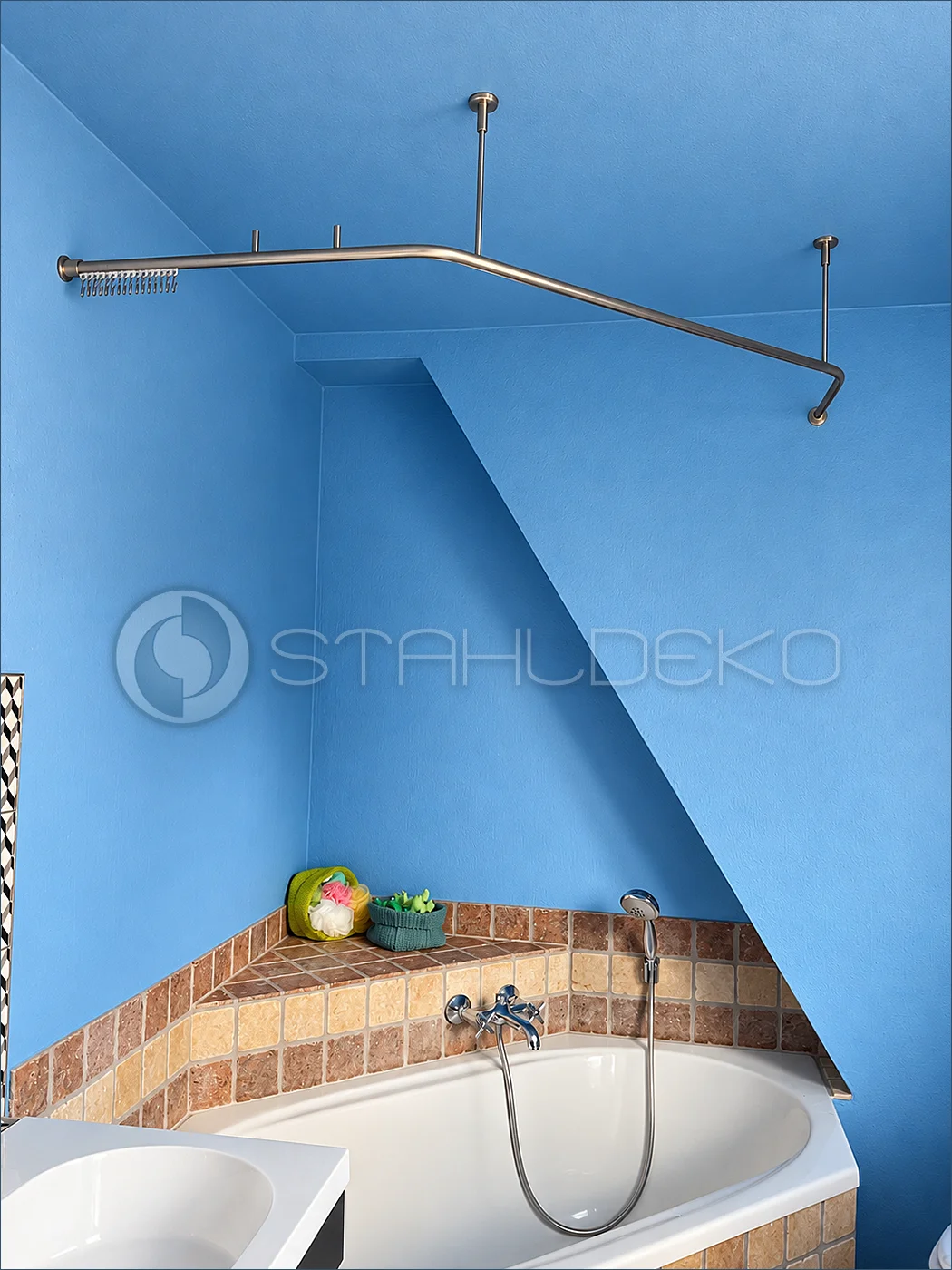
In a shower, the rod's shape determines where the curtain hangs. That matters particularly with corner bathtubs, freestanding tubs, sloped ceilings, and unusual floor plans. Straight and curved internal-track shower curtain rods are therefore part of the range, along with L-shaped, U-shaped, and other custom configurations.
Internal-track shower curtain rods are available in stainless steel look, white, and black. For straight round-tube shower curtain rods, Stahldeko uses V2A stainless steel. The appropriate mounting arrangement depends on the installation: wall brackets, ceiling supports, or a combination of both may be needed.
One customer-gallery photo shows a five-sided solution for a corner bathtub. This shape is not chosen simply because a pentagon looks unusual; it is designed to make the curtain follow the bathtub and fit the available space.
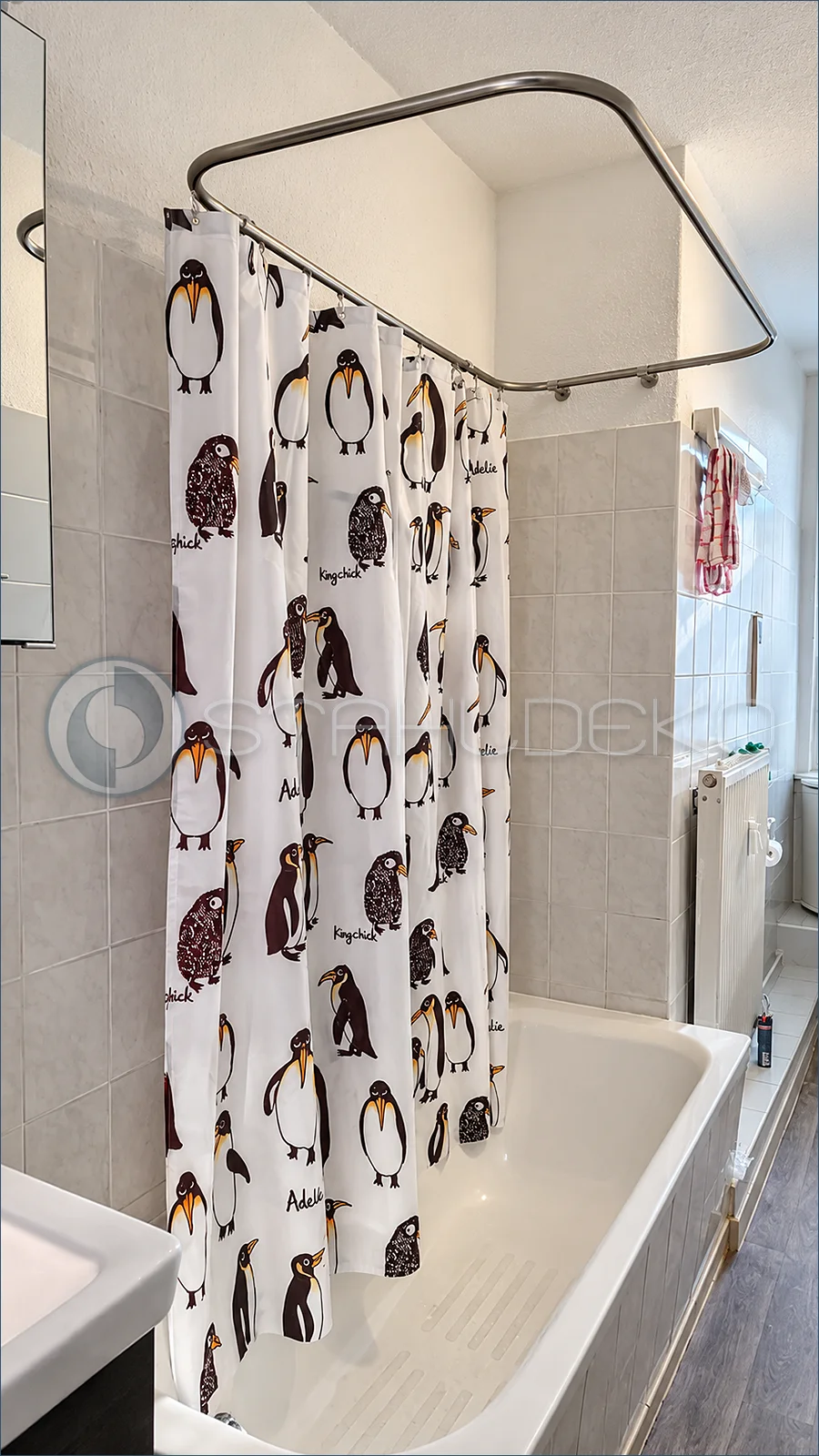
Other bathrooms call for a closed shape. A rectangular shower curtain rod can surround an entire shower area. These examples show why choosing a shower curtain rod involves more than selecting a length.
04 / Hallways and Dressing Rooms
Clothes Rails: Creating Storage Where There Was None
A coat-storage area does not have to be a piece of ready-made furniture. Sometimes a stainless steel rail is all it takes to make use of a narrow recess or an empty wall. Stahldeko's gallery includes clothes rails beneath windows, beside cabinets, in hallway corners, and in walk-in closets.
Many of the documented clothes rails are made from round stainless steel tubing. Depending on the design, they may be straight or curved and use wall brackets, ceiling hangers, or floor supports. Clothes can be hung on hangers; certain designs also accommodate S-hooks. What matters is that the structure fits the available space and the intended load.
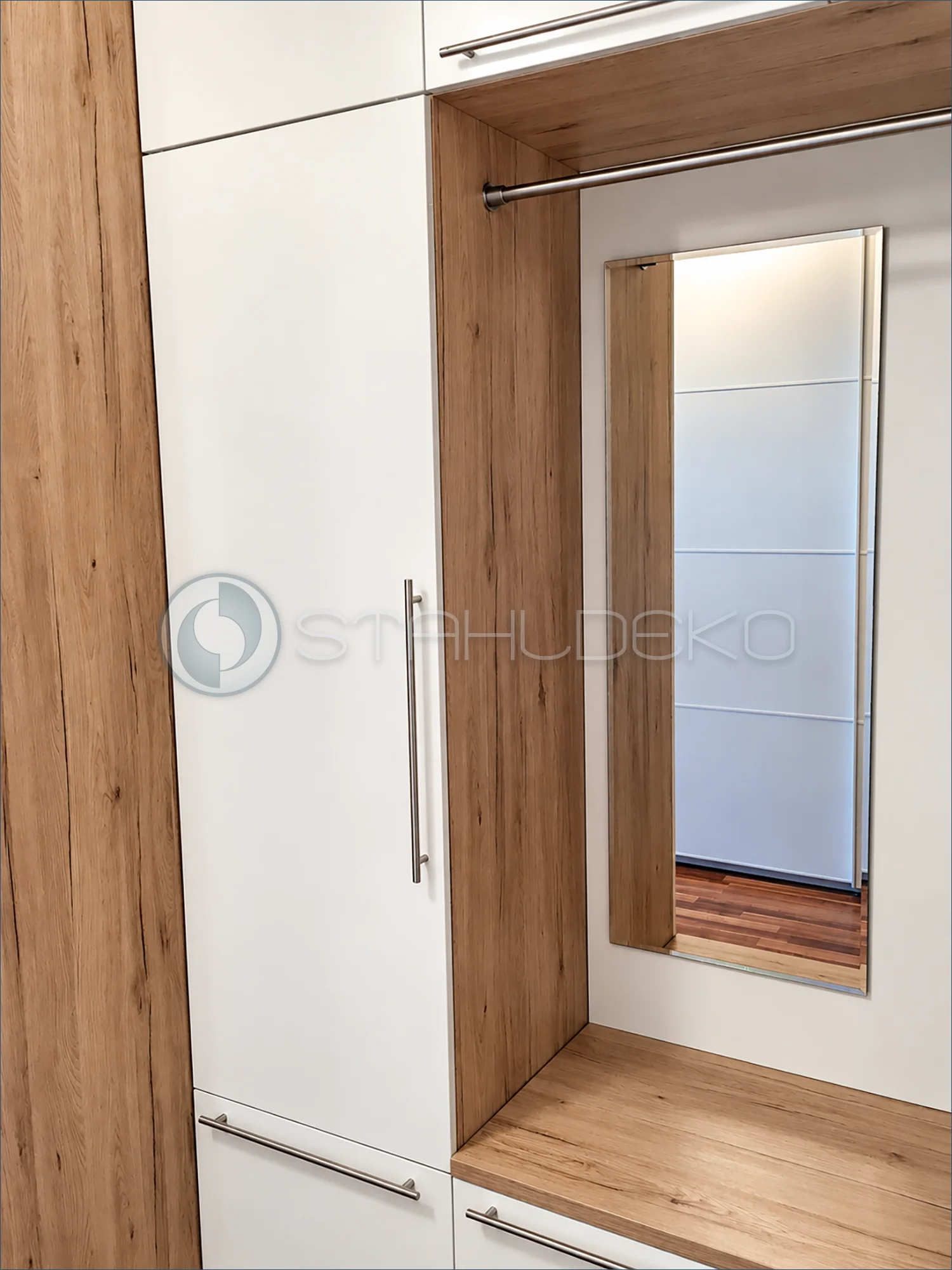
One entrance-area installation combines a clothes rail with a bench and wood paneling. The metal rail is visually understated but serves a clear purpose: turning an architectural recess into useful coat storage.
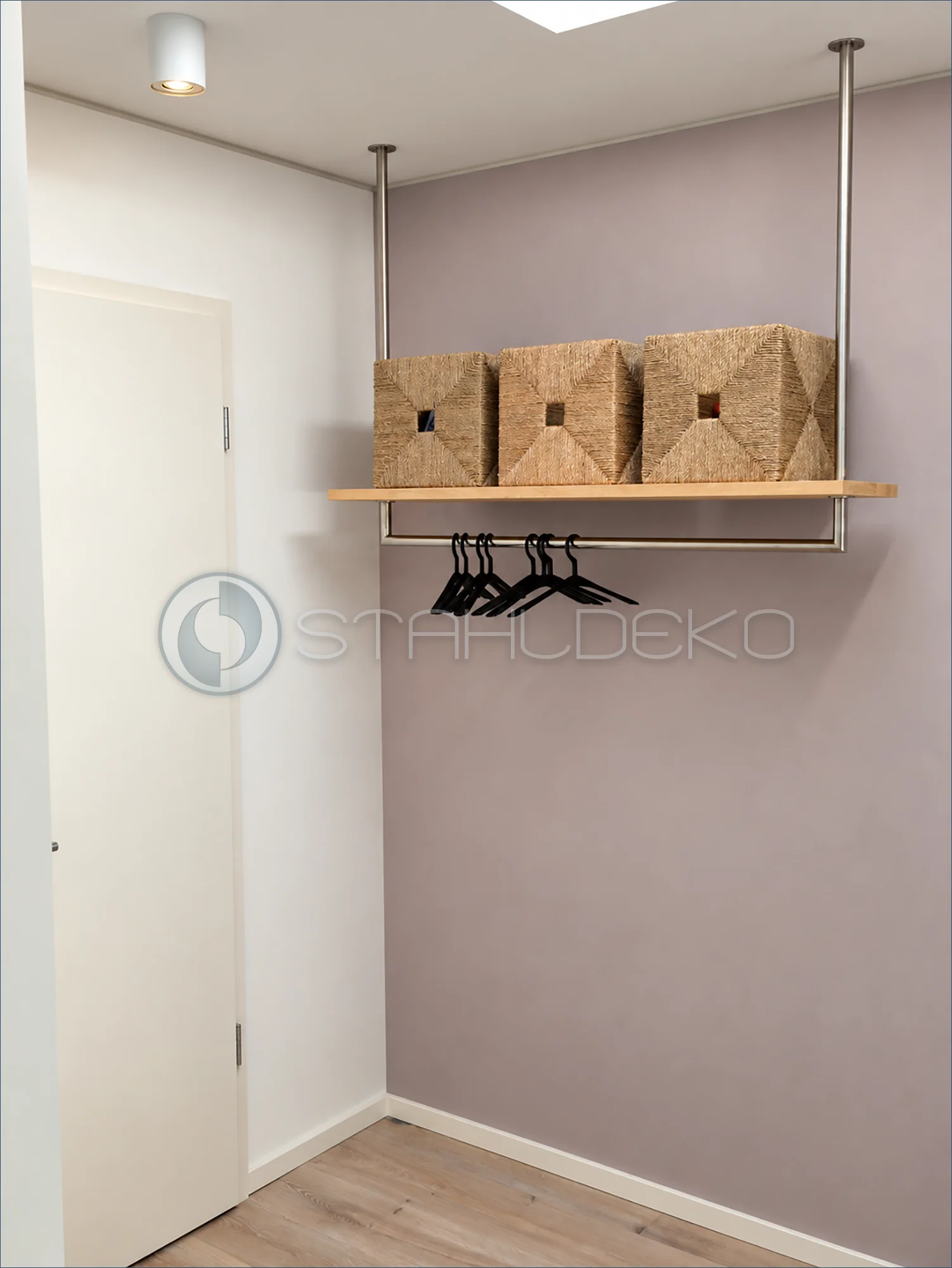
Another design hangs from the ceiling and combines a clothes rail with a wooden shelf for baskets. Here, the rail is part of a larger storage arrangement rather than a standalone fixture.
05 / In the Kitchen
Kitchen Rails and Towel Bars: Small Details, Practical Benefits
In a kitchen, convenience often comes down to keeping things within reach. A dish towel needs a place to hang, utensils need to be accessible, and a rail along a countertop can also provide a finished visual edge. Stahldeko offers kitchen rails, furniture rails, hook rails, and towel bars for these purposes.
The gallery includes both stainless steel and brass versions. Some rails are straight; others follow a corner or the curved edge of a countertop. With custom kitchen cabinetry in particular, shape matters: a rail should fit the existing furniture rather than look like an unrelated add-on.
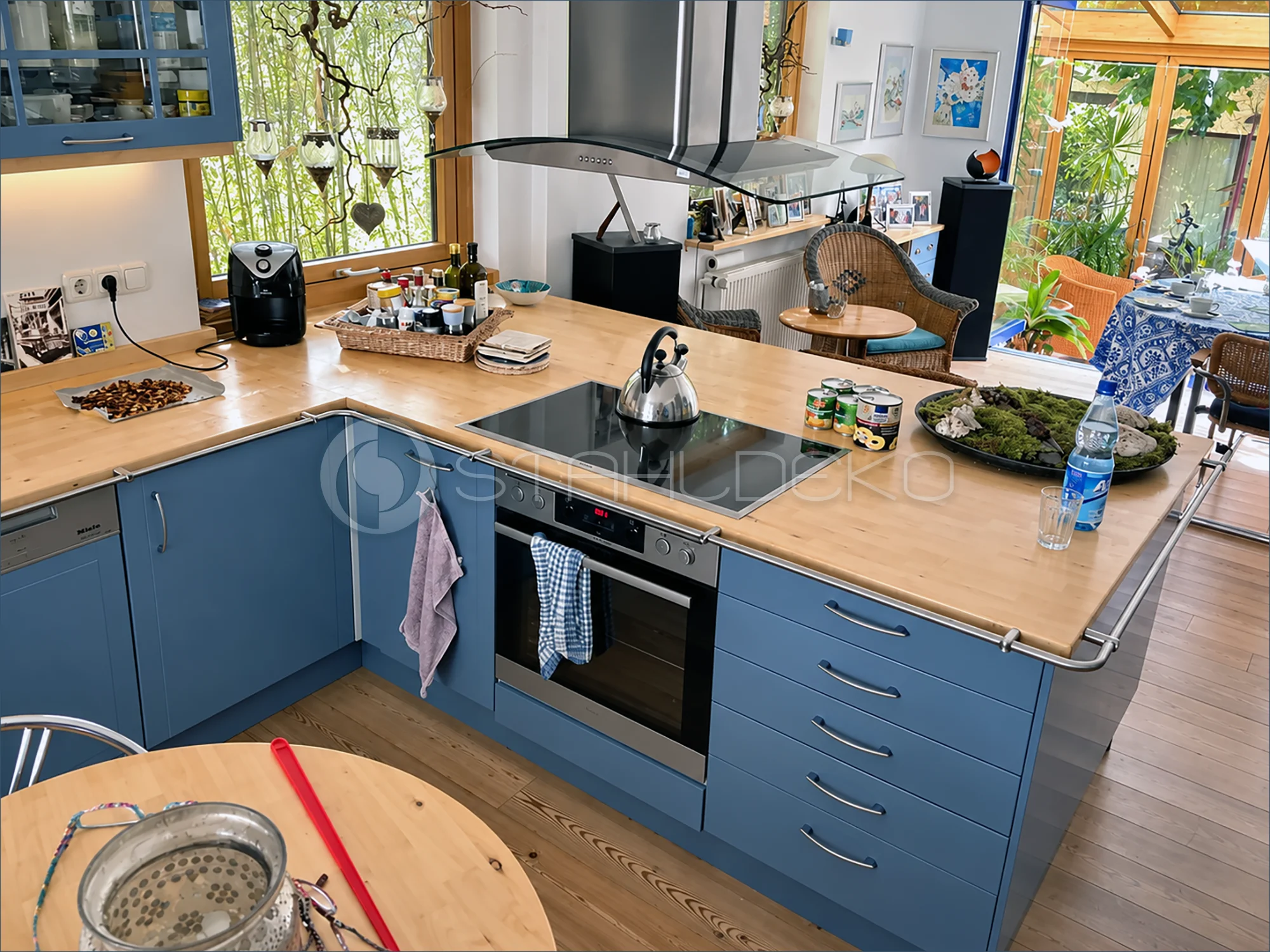
One photo shows a stainless steel rail on a blue kitchen island. Its curved corner follows the cabinet's edge. Another shows a brass rail in a traditional kitchen—an example of how material and finish can change the appearance of a functional component.
06 / Outdoors
On Patios and Pergolas, Curtain Rods Provide Privacy
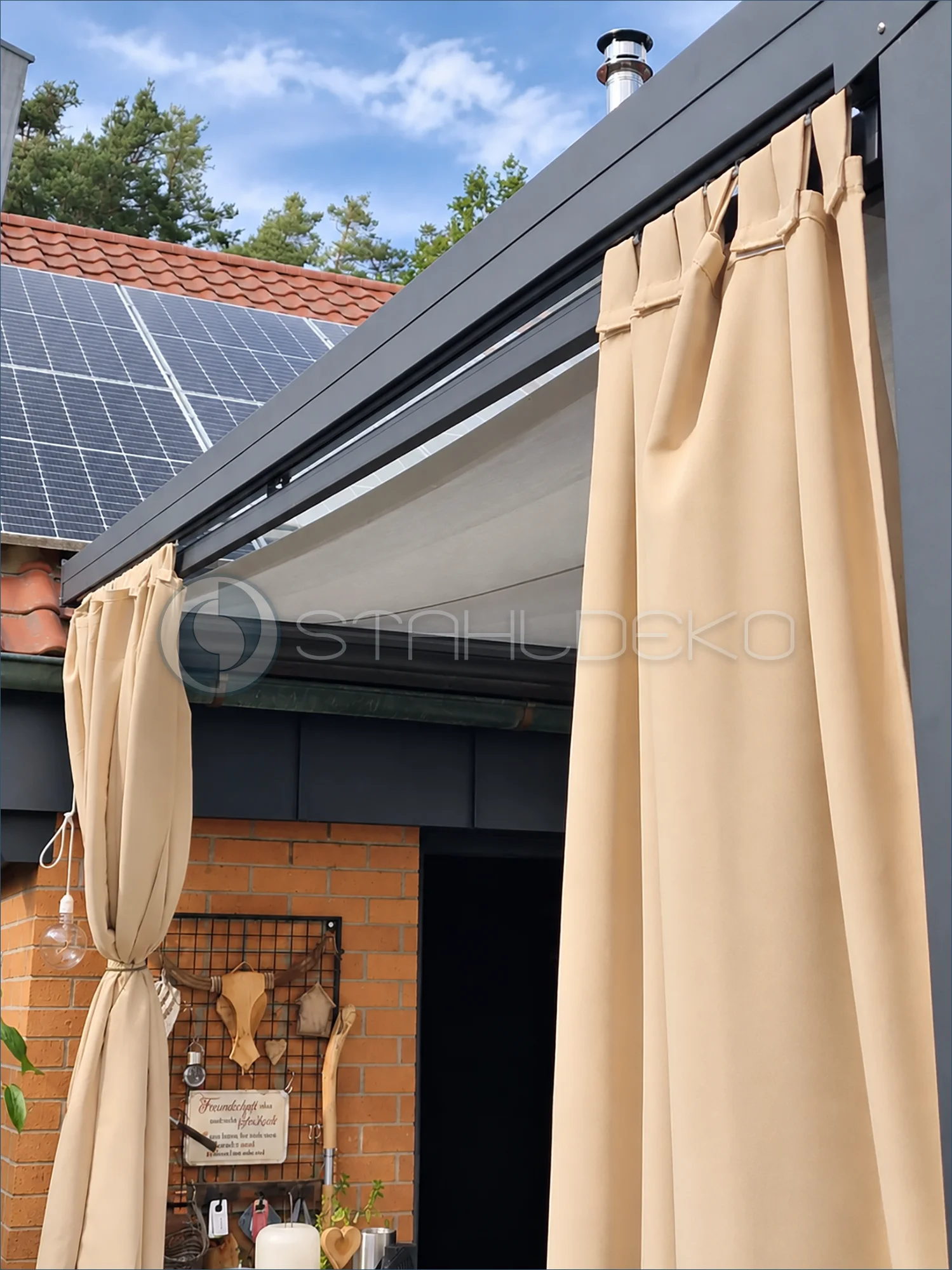
Curtains are no longer limited to living rooms. Under a pergola or on a covered patio, they can provide privacy along the sides and make the outdoor seating area more flexible. The track and its mounting must suit the supporting structure.
Customer photos show black curtain tracks on pergolas, stainless steel rods beneath glass roofs, and U-shaped curtain arrangements around sheltered seating areas. They also show how different the same basic idea can look: a black profile blends into a modern dark pergola, while a stainless steel rod may remain intentionally visible.
For outdoor use, material selection, mounting, curtain fabric, and local weather conditions all need to be considered. The photos illustrate real installations but do not replace an assessment of suitability for a particular location.
07 / Commercial Spaces
Commercial Interiors: Curtains as Movable Walls
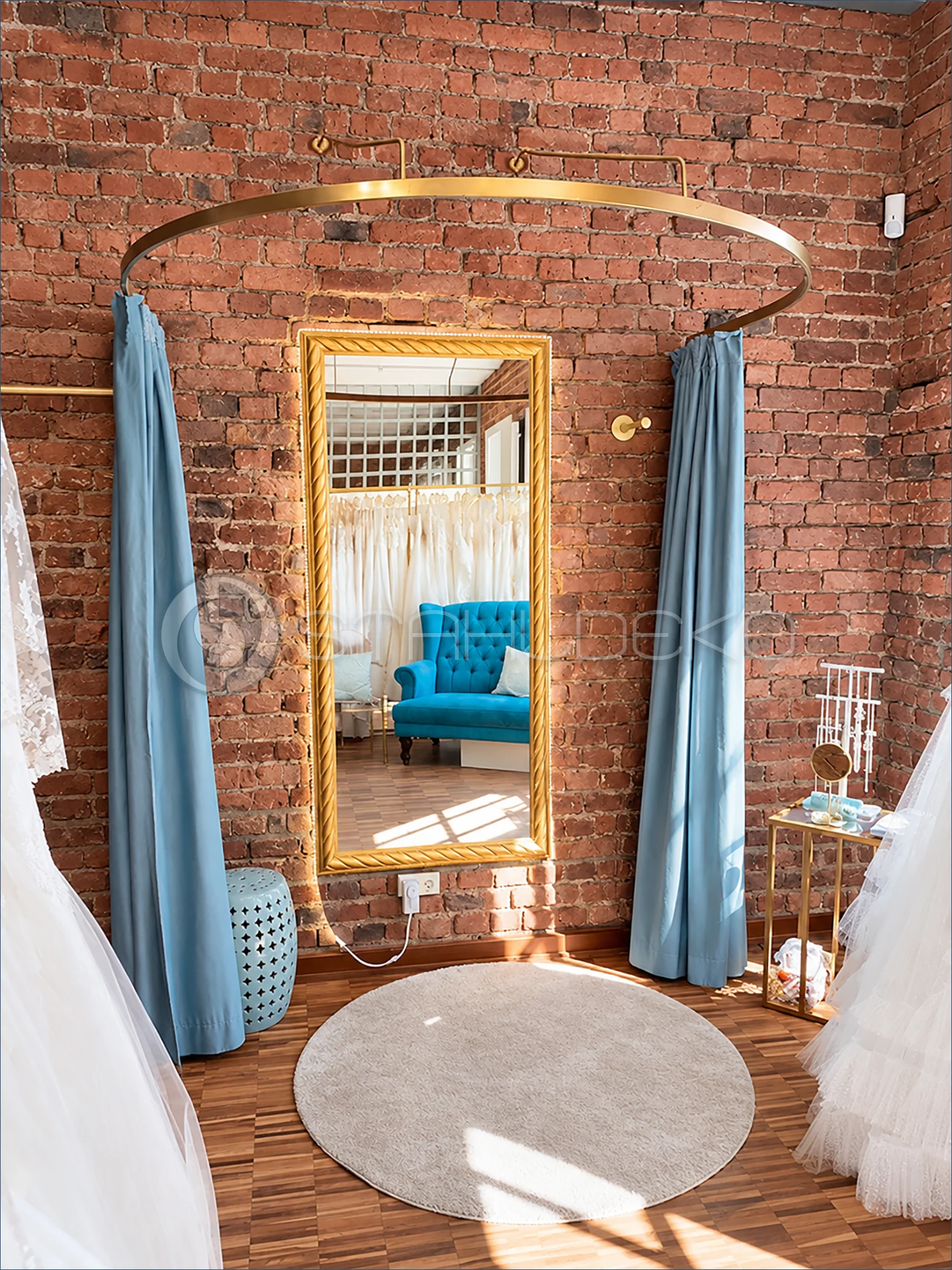
Curtain systems become especially versatile in spaces that need to serve different purposes. In a boutique, a curved curtain can create a fitting room. In a massage practice, several tracks can separate treatment areas. In a café, a heavy curtain at the entrance can serve as a draft barrier.
These applications go beyond decorating a window. They involve privacy, dividing space, directing movement, and sometimes shielding an entrance. The rod or track needs to suit the room's geometry and integrate with the existing interior.
One example is a semicircular fitting area in a bridal boutique. The curved track creates a separate changing space without the need to build a permanent wall. The customer gallery shows different styles and finishes, from understated white to more prominent gold-colored designs.
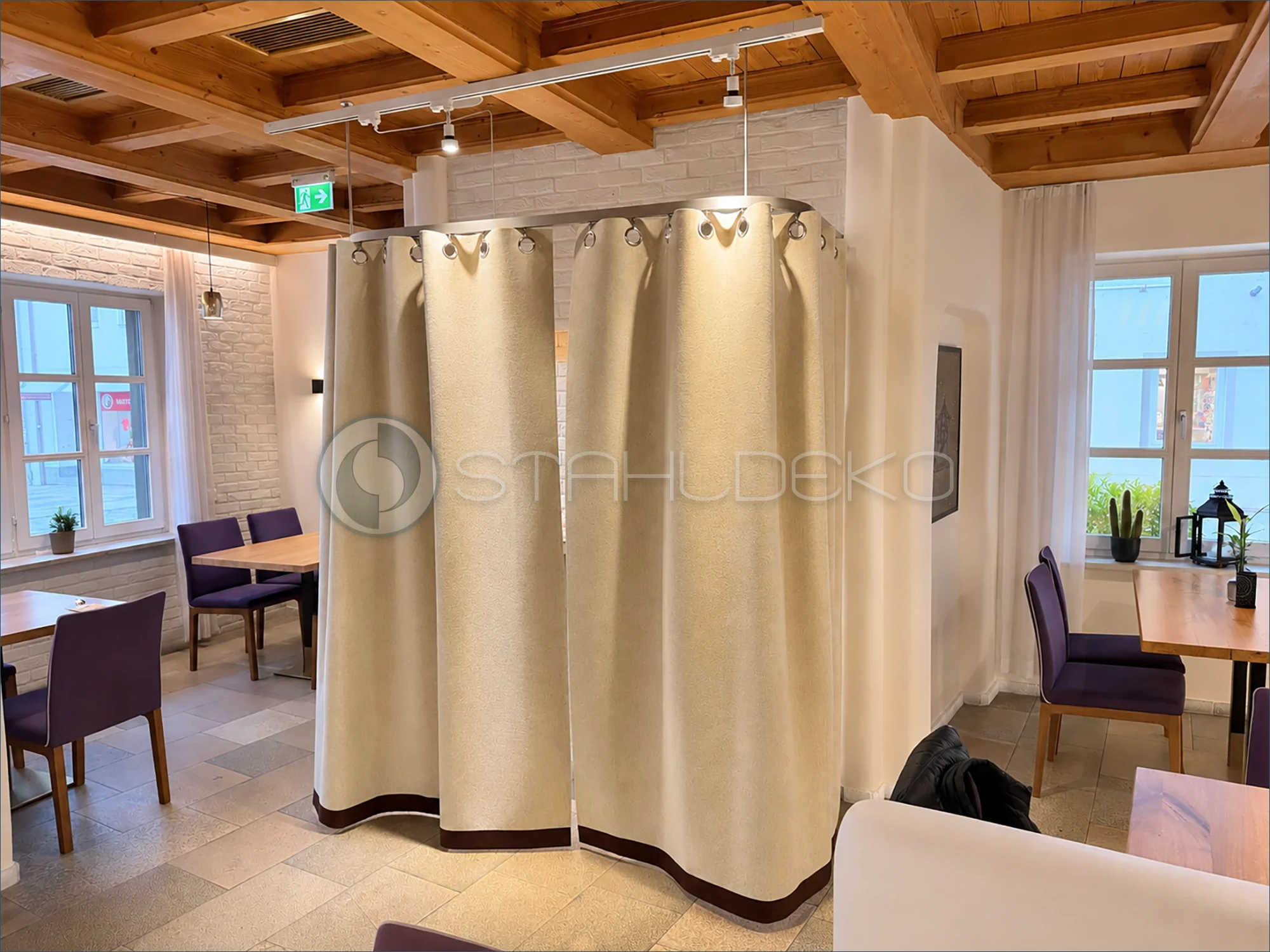
In the café, a different shape serves a different purpose. A U-shaped curtain track creates a separate area near the entrance. With a suitable heavy curtain, it can help reduce drafts in the dining area. Its effectiveness depends on the overall installation.
08 / Finding the Right Solution
Custom-Made Means Designing Around the Space
Despite the variety of products, Stahldeko's approach comes down to a simple idea: not every room should have to adapt to a standard product. Sometimes it makes more sense to adapt the rod to the room. That might mean an unusual length, a specific bend, a special mounting arrangement, or a combination of requirements.
The gallery examples also show why there is no universal solution. A kitchen rail has different requirements from a shower curtain rod; a clothes rail needs different support from a lightweight curtain track. Material, profile, shape, and mounting therefore have to be considered in relation to the intended use.
What looks effortless in a finished room begins with a specific question: What does this structure actually need to do here? For the customer, the result is a more usable space. For the workshop, it is the starting point for an individual manufacturing task.
09 / Inside the Workshop
Behind the Products Is the Workshop
Customer photos show the finished results: a curtain following a bay window, a fitting area that can be opened and closed, or a clothes rail making good use of a recess. What they usually do not show is how measurements and requirements become finished metal components.
That is the subject of Part 3 of this series. It takes readers into the Emskirchen workshop and uses production photos to explore the role of bending, templates, shape checks, and trial assemblies in custom fabrication. Part 4 then looks at another challenge: how do you ship a curtain rod several meters long that has been bent into shape in one piece?